
Last updated September 20, 2026
Free on-site gate assessment - hinges, posts, and your LiftMaster or Nice gate operator checked before anything is quoted
The assessment is free and the quote is the invoice.
 Before
 After
After Before
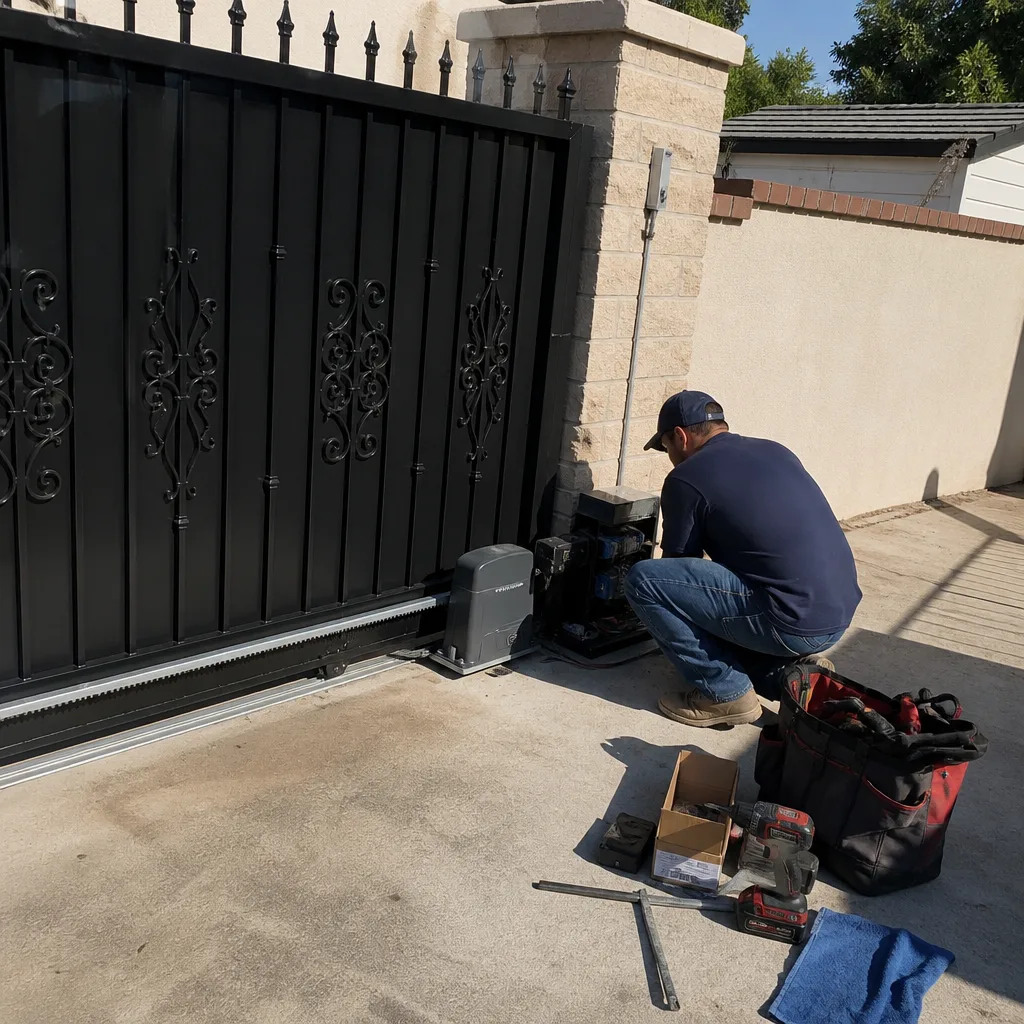 After
After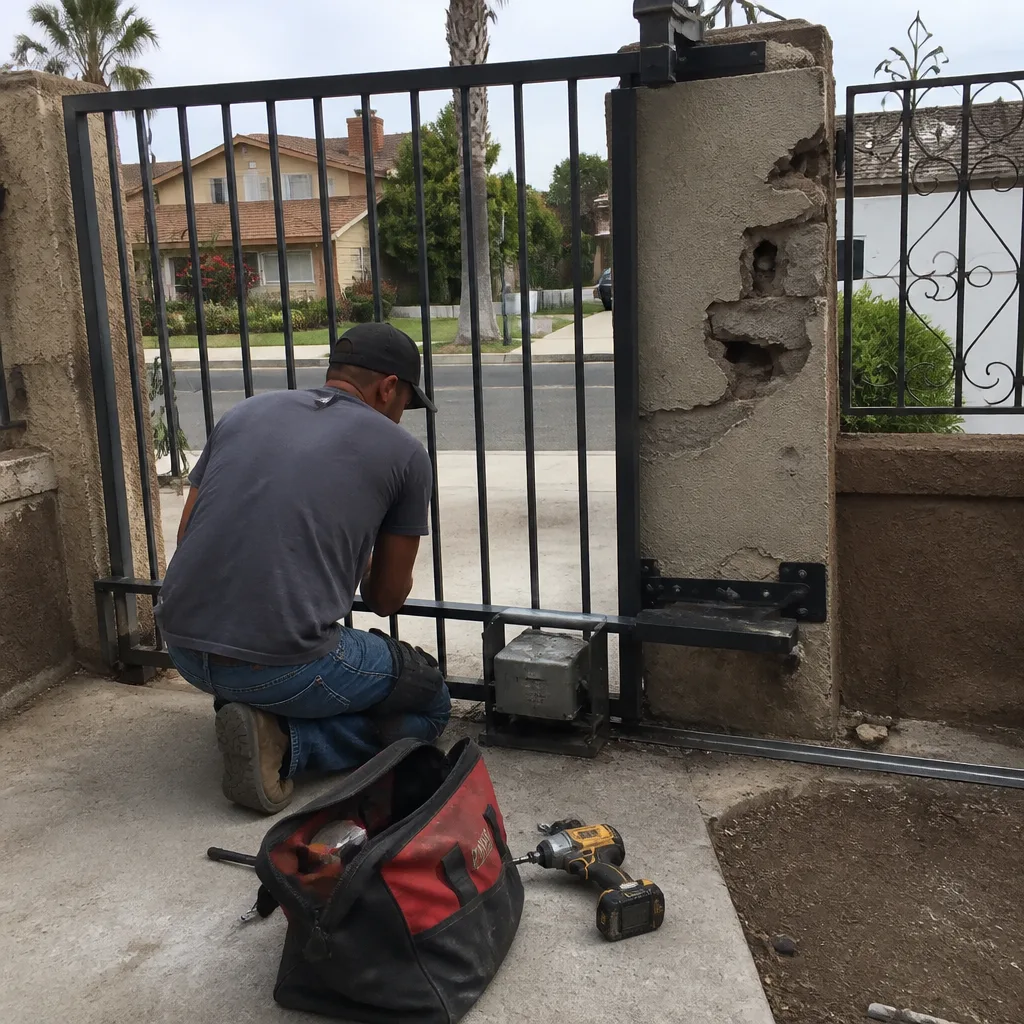 Before
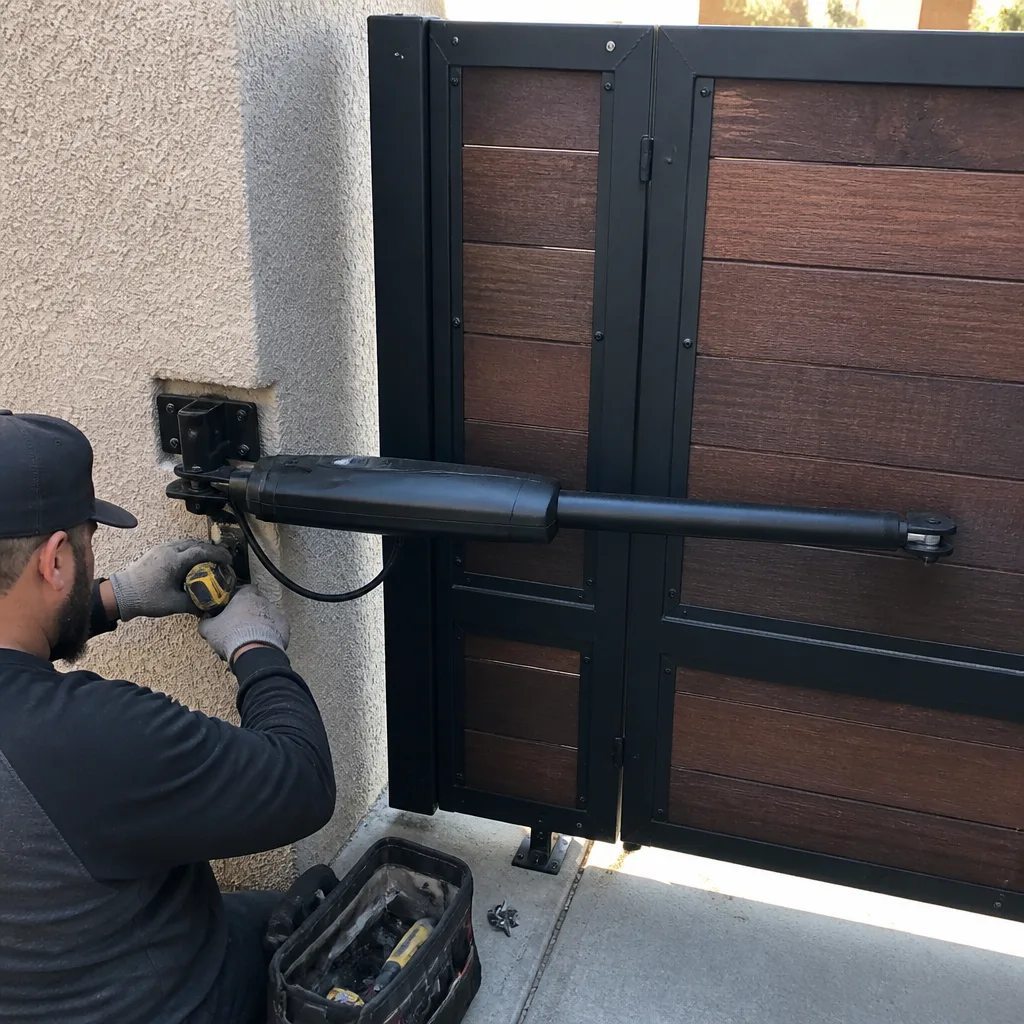 After
AfterSeasonal Gate Repair Care for Fontana: Year-Round Homeowner’s Guide
Fontana doesn’t have four equal seasons. We have a heat season that cooks gate motors from June through September, a wind season that works hardware loose from October through November, a short but violent wet season that undermines posts from December through February, and a narrow mild window from March through May where deferred repairs actually get done. Most homeowners in Fontana schedule gate maintenance in spring, when the damage is already visible. The higher-leverage move is October, when you can catch heat damage before winter rain finds every gap the summer opened. This guide matches care tasks to that real cycle, so you’re working on the right problem in the right month, not reacting to a gate that’s already failed. For a deeper dive, see The Complete Guide to Gate Repair in Fontana.
Quick Answer
Seasonal gate care in Fontana means four distinct routines: adjust operator force settings and check backup batteries before peak summer heat, do a full post-heat inspection in October before the rains arrive, watch for post-footing erosion and electrical faults during the wet winter months, and use the mild March-through-May window for hinge replacement, weld repairs, and re-painting. Most gate failures in Fontana are seasonal, not random, and the repair that costs $300 in October costs $900 in February when the rain has done its work.
Table of Contents
- The Heat Season: June Through September
- The October Inspection Window: Post-Heat, Pre-Rain
- The Wet Season: December Through February
- The Mild Window: March Through May for Real Repairs
- Building a One-Page Seasonal Gate Log
- Common Mistakes to Avoid
- When to Call a Professional
- Frequently Asked Questions
Key Takeaways
- The single best habit: schedule a full gate inspection in October, before the rain season starts.
- Sustained 100°F+ heat is harder on gate operators than cold weather ever will be in Fontana.
- Most post-footing erosion shows up at the surface long before the gate actually leans.
- March through May is the correct window for hinge, weld, and paint work, not October.
- A one-page written log, kept seasonally, saves you from paying twice to rediscover the same problem.
BeforeAfterThe Heat Season: June Through September
Fontana regularly sees triple-digit stretches between June and September, and those temperatures do specific, predictable things to gate hardware. The failure mode is rarely dramatic. It’s a slow degradation that shows up as a gate that hesitates, reverses, or stops mid-travel on the hottest afternoons.
The component we see fail most often in Fontana heat is the operator capacitor. A capacitor is a small cylinder inside the motor housing that stores the electrical charge needed to start the motor. Heat accelerates the breakdown of the dielectric material inside that cylinder, which means a capacitor that works fine at 8 a.m. may not hold enough charge to start the motor at 3 p.m. when the housing temperature has climbed past 140°F. The symptom is characteristic: the gate hums but doesn’t move, or it moves slowly and then stops. The fix is usually a $40 to $90 capacitor replacement, not a new motor.
Battery backup units are the second heat casualty. Most gate operators have a sealed lead-acid or lithium battery that keeps the gate working during a power outage. Those batteries are rated for a specific temperature range, typically up to 104°F ambient. When the operator housing sits in direct sun on a 100°F Fontana day, the internal temperature can exceed that rating by 30 degrees or more. The battery swells, loses capacity, and eventually fails. We recommend checking backup battery voltage in late May and again in early September.
Control boards are the third weak point. The solder joints and semiconductors on a gate control board expand and contract with thermal cycling. Over a Fontana summer, that daily swing of 40 or 50 degrees between night and afternoon can crack a cold solder joint. The gate may work intermittently, or it may stop responding to remotes and keypads entirely. Control board failures are harder to predict than capacitor failures, but they follow the same seasonal pattern: most of them present in August and September, after the cumulative thermal stress has done its work.
There’s one setting you should adjust before peak heat arrives: the operator’s force setting, also called the obstruction sensitivity or current limit. This setting controls how much resistance the motor pushes through before it reverses. Heat makes the gate physically heavier. Metal expands, hinges bind slightly, and the gate’s rolling resistance increases. If the force setting is already near its upper limit from winter, the added heat load can trip the obstruction detection and cause the gate to reverse mid-travel for no visible reason. Backing the force setting down slightly in late May, or having a technician do it, prevents a season of nuisance reversals.
If you have an Elite or Mighty Mule operator, pay particular attention to the thermal cutoff behavior. Those units use a thermal switch that opens when the motor overheats, and once that switch trips, the gate stays dead until the motor cools down, sometimes 20 or 30 minutes. A gate that works in the morning, dies at noon, and works again at 6 p.m. is usually a thermal cutoff issue, not a broken motor.
The October Inspection Window: Post-Heat, Pre-Rain
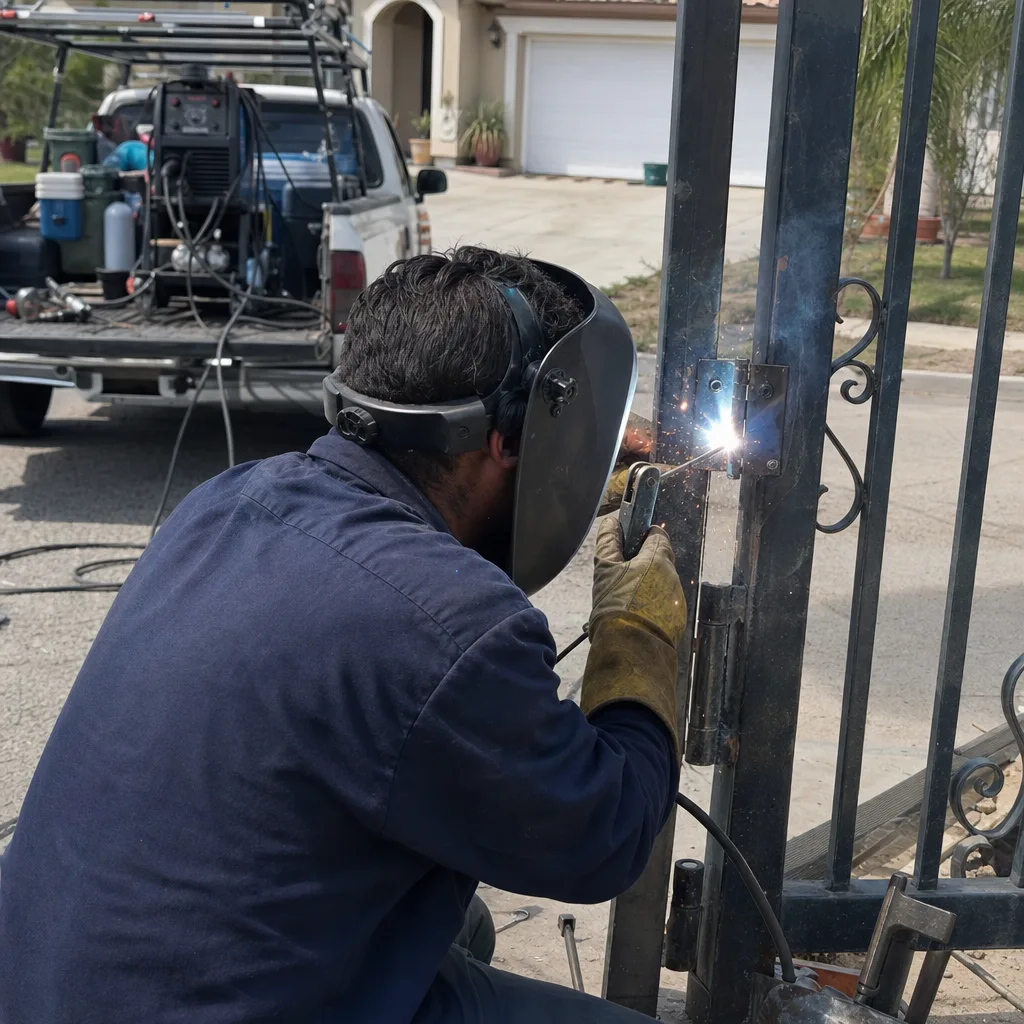
October is the most important month on the Fontana gate-care calendar. The heat has done its damage. The rain hasn’t started yet. Every gap, crack, and loose fastener you find in October can be fixed before winter water turns it into a structural problem. Here’s what a complete October inspection covers, in order.
- Operator function test. Run the gate through five full cycles. Listen for changes in motor pitch, hesitation at start, or an unusual grinding sound. Compare the gate’s travel speed to what it was in spring. A slower gate in October means the motor is working harder, and the cause is usually heat-related wear on bearings or the drive mechanism.
- Capacitor and battery check. If the gate hummed but failed to start at any point during the summer, the capacitor is the prime suspect. On operators with a battery backup, disconnect AC power and run the gate on battery alone. A battery that won’t hold the gate through a full cycle needs replacement before winter, when power outages are more common.
- Photo-eye alignment. The photo-eye is the infrared beam across the gate opening that tells the operator to stop and reverse if something breaks the beam. Thermal expansion over summer can shift the mounting bracket just enough to misalign the beam. A misaligned photo-eye causes the gate to refuse to close or to reverse immediately after starting. This is a two-minute fix that costs nothing when you do it yourself and still under $100 when we do it.
- Hinge and roller inspection. Look at each hinge point on a swing gate or each roller on a slide gate. Swing-gate hinges wear unevenly in Fontana because the gate side facing the afternoon sun expands more than the shaded side. You’ll see the gate sag slightly on the latch side or hear a scrape as it crosses the latch plate. Slide-gate rollers flatten on the bottom from carrying the gate’s weight, and the gate will start to wobble as it travels. Both conditions get worse when rain adds weight to the gate leaf.
- Post and footing check. Walk around each gate post and look at the base where the post meets the concrete or soil. Hairline cracks in concrete footings, gaps between the post and its footing, or visible rust staining at the post base are all signs that water is already finding its way in. October is the time to seal those gaps, before the rain season starts in earnest.
- Weld and fastener survey. Check every visible weld for cracks and every bolt for looseness. The Santa Ana wind season, which typically starts in October, will find any loose hardware and work it further loose. A gate that rattles in the wind is a gate that’s wearing out its own hinges and operator.
This October inspection is exactly the kind of work we document in writing. Under The Haven Standard, every inspection we perform leaves you with a photo log of what was found, what was adjusted, and what was replaced. If you prefer to do the inspection yourself, write down the measurements: hinge play in fractions of an inch, force setting values, battery voltage. That record becomes the baseline for next year.
The Wet Season: December Through February
Fontana’s rain season is short but intense. We may get the same annual rainfall as other Southern California cities in ten or twelve concentrated events rather than forty days of drizzle. That pattern matters for gate care because each heavy rain event is a stress test, and the failures show up in the days after, not during, the storm.
The most common wet-season problem we see in Fontana is post-footing erosion. Gate posts carry the full weight of the gate leaf plus the dynamic load of every open-and-close cycle. When a post is set in concrete, the concrete-soil interface is the weak point. Heavy rain saturates the soil around the footing, and if there’s any gap or crack at that interface, water flows through it and washes soil away from beneath the footing. The early signs are visible from the surface: a ring of soil depression around the post base, a post that’s slightly out of plumb, or a gate that scrapes the ground only after rain. If you catch those signs early, the fix is often as simple as regrading the soil around the post and sealing the gap. If you wait until the gate visibly leans, you’re looking at resetting the post, which means digging out the footing, re-pouring concrete, and re-hanging the gate. That’s a $600 to $1,200 repair instead of a $150 prevention job.
Electrical faults are the second wet-season pattern. This is where the October capacitor and battery check pays for itself. Water that gets into an operator housing, a junction box, or a keypad causes short circuits, ground faults, and corrosion. The telltale signs are a gate that trips its GFCI breaker during or after rain, a keypad that stops responding, or a remote that works intermittently. If you see any of those symptoms after a storm, the fix is usually straightforward: dry out the housing, clean the corrosion, replace the corroded connector, and seal the entry point. If you ignore the water intrusion and keep running the gate, the corrosion spreads to the control board and the repair bill triples.
LiftMaster operators, which are among the most common units we service in Fontana, have a specific wet-season failure mode worth knowing about. The RPM sensor that tells the control board the gate is moving sits near the drive shaft, and if water gets into that area, the sensor shorts and the operator immediately reverses the gate or shuts down entirely. The symptom looks like an obstruction problem, but it’s actually a water-intrusion problem. Every winter we replace several of those sensors on LiftMaster units, and the fix is under $100 if caught early.
Your wet-season routine should be short. After each significant rain event, walk the gate and check three things: does the gate scrape the ground when it moves, does the operator sound different, and does the gate reverse for no reason? If the answer to any of those is yes, note it in your seasonal log and address it before the next storm.
The Mild Window: March Through May for Real Repairs
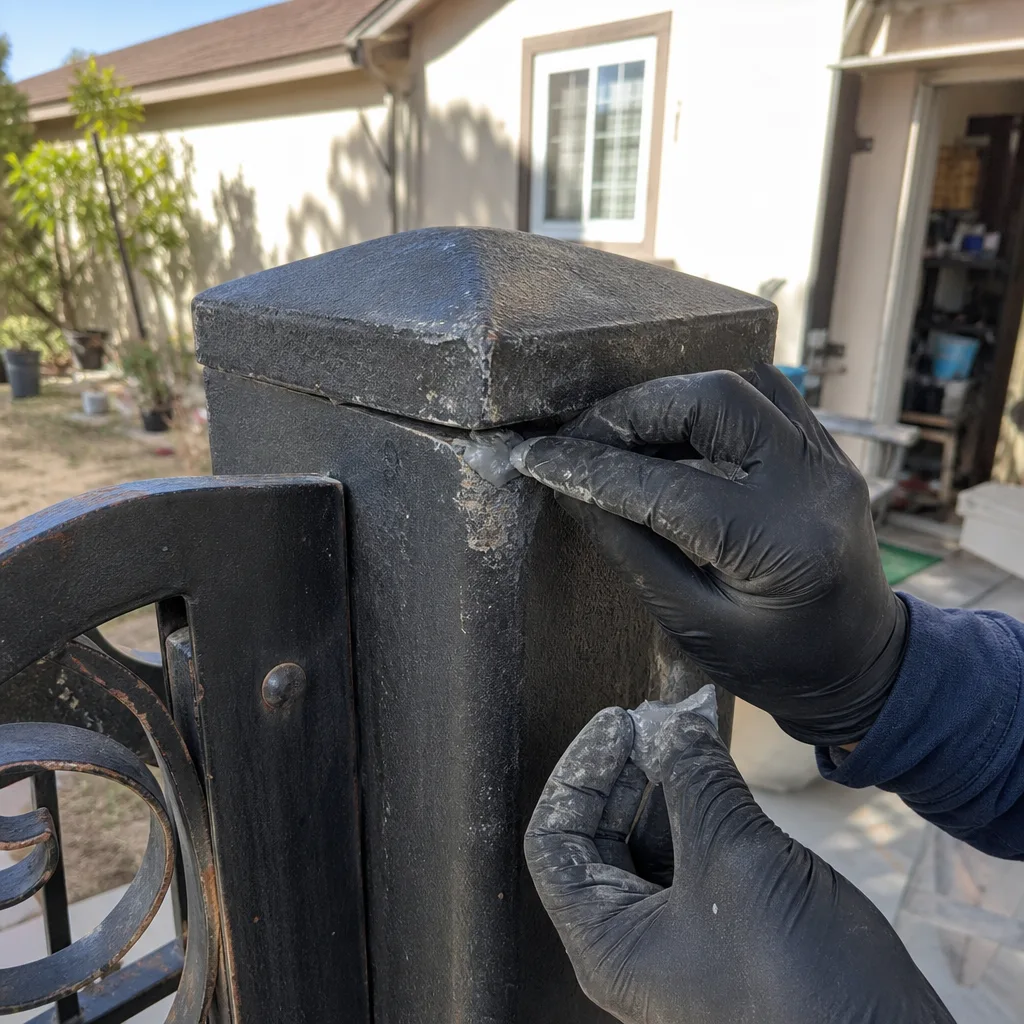
Fontana’s mild season is the correct time to do the repairs you deferred during the wet season. March through May offers moderate temperatures, low humidity, and minimal rain, which means adhesives cure properly, paint adheres well, and metal work doesn’t fight thermal expansion. It’s also the window before UV exposure ramps back up in June, so any new paint or protective coating gets a gentle break-in period before the sun starts working on it.
Hinge replacement belongs in this window. Hinges on Fontana gates wear out on a predictable schedule, and the wear accelerates when a gate has been running all winter with wet, swollen wood or rusted metal. Replacing a hinge in March means the new hinge beds into the gate and post before the summer heat arrives. Replacing it in July means the metal is already expanded from the heat, and the fit you achieve at 2 p.m. is not the fit you’ll have at 7 a.m. That’s a practical machining reality, not a preference.
Weld repairs follow the same logic. Welding on a gate that’s been soaking in winter moisture means fighting rust, steam, and contamination in the weld pool. A weld done in April on clean, dry metal is structurally better than a weld done in February on damp metal. If you have cracked welds on a swing gate, a slide gate track, or a gate frame, schedule that repair for the mild window.
Re-painting and re-coating is the third mild-season task. The UV index in Fontana climbs sharply in May, and raw or primed metal left exposed to June sun oxidizes quickly. Paint applied in March or April cures before the heat arrives and provides its full protective life. Paint applied in August often blisters or fails to bond because the metal surface is too hot. If your gate has visible rust spots, bare metal, or peeling powder coat, treat those surfaces in the mild window with a rust converter, primer, and exterior-grade paint matched to your gate’s finish.
This is also the right time for any gate motor or opener tune-up that involves replacing parts rather than just adjusting settings. A gearbox rebuild, a drive-chain replacement, or a limit-switch replacement goes more smoothly when the technician isn’t fighting 105-degree heat and the metal isn’t expanding under the afternoon sun. We schedule more of these jobs in April than in any other month, because the parts fit better and the adjustments hold longer.
Building a One-Page Seasonal Gate Log
The highest-value habit in this entire guide is keeping a one-page written log of your gate. It doesn’t need to be complicated. A single sheet of paper with four dated entries per year will do more to extend your gate’s life and reduce your repair costs than any product you can buy. Here’s how to set it up.
Create a single page with four sections labeled Heat Season, October Inspection, Wet Season, and Mild Window. Each time you do a seasonal check, write the date and the following information:
- Operator behavior. Note how the gate starts, stops, and reverses. Write down anything unusual in one sentence: “gate hesitates 2 seconds before starting on hot afternoons” is more useful than “gate acting weird.”
- Measurements. Record hinge play in fractions of an inch, gate travel time in seconds, and battery voltage if you have a multimeter. Numbers are the only thing that lets you compare year over year. “Hinge play 1/8 inch in March 2025, 3/8 inch in March 2026” tells you exactly when to plan a hinge replacement.
- Adjustments made. If you changed a force setting, realigned a photo-eye, or tightened a bolt, write down the before and after values. This is the habit that saves you from paying a technician to rediscover what you already knew.
- Parts replaced. Record the part number, brand, and date for anything you replace. When the capacitor fails again in three years, the log tells you it’s been three years, which helps you decide between another capacitor and a more comprehensive repair.
- Weather notes. Write one line about the season: “summer peak 112°F, gate refused to start on the three hottest days” or “two heavy rain events in January, gate scraped ground after the second.” Fontana’s weather patterns drive gate wear patterns, and those notes explain later symptoms.
Keep this log near your electrical panel or in a garage drawer. When you sell the house, hand it to the buyer. When a technician comes out, show it to us. A homeowner who can produce a written log of their gate’s history gets a faster diagnosis and a more accurate repair, because we’re not starting from zero. We’ve been keeping records like this on every job since 2014, and the customers who keep their own records spend less on us over time because their gates fail less often.
Common Mistakes to Avoid
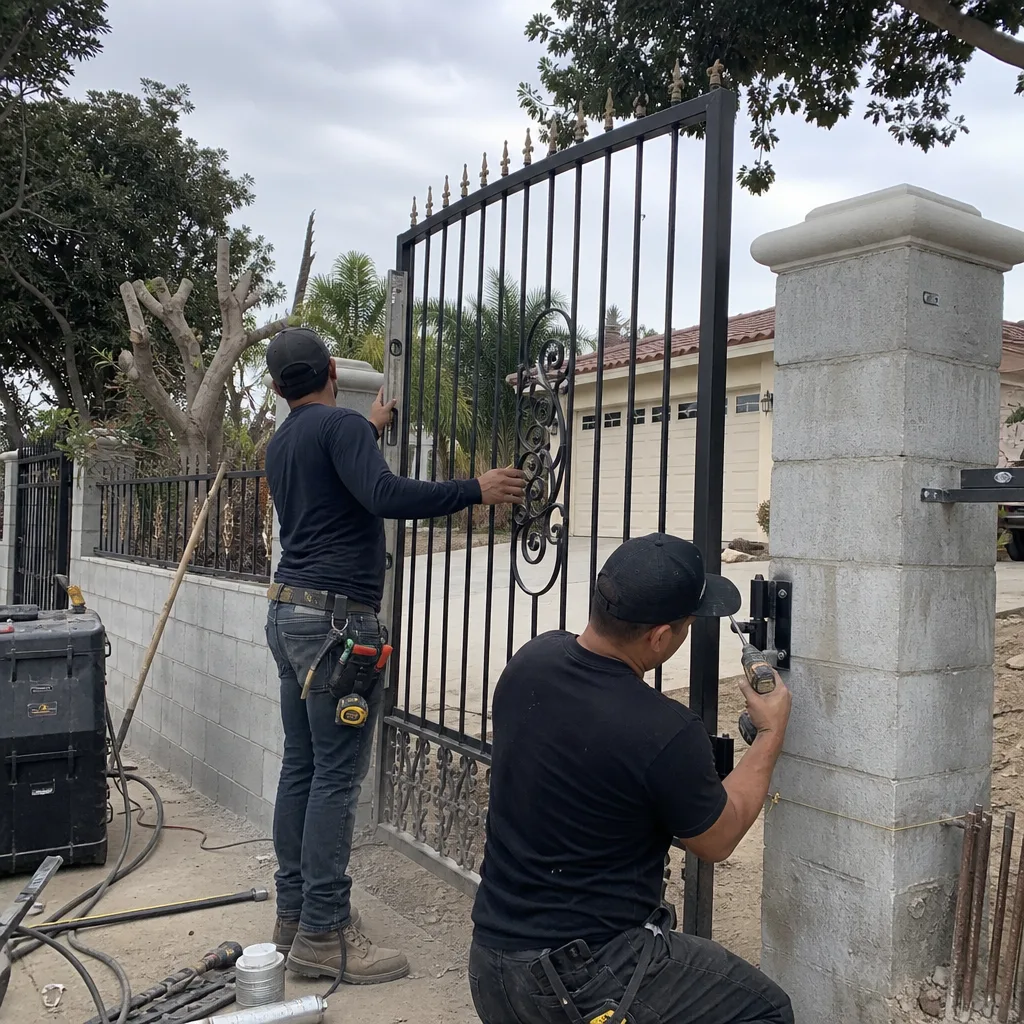
- Waiting to fix October problems until spring. The gap you find in October becomes a wet, rusted split by February. A $20 tube of sealant applied in October prevents a $400 hinge replacement in March. This is the single most expensive mistake Fontana homeowners make.
- Adjusting the force setting up instead of down in summer. When a gate reverses mid-travel in July, the instinct is to increase the force setting so the gate pushes through the resistance. That masks the real problem, which is usually heat-related binding or a failing capacitor, and it can damage the operator in the process.
- Ignoring a gate that scrapes the ground after rain. That scrape is post-footing erosion or a swollen gate leaf, and both problems compound. The gate’s weight on the ground increases the motor’s load, which shortens the operator’s life and digs the scrape deeper with every cycle.
- Painting or welding in the wrong season. Paint applied during the summer heat season on a metal gate whose surface temperature is 140°F will fail prematurely. Welds made on damp metal in February are weaker than welds made on dry metal in April. The season you do the work in determines how well the work holds.
- Keeping repair records in your head. What you remember in March is not what happened in August. Memory softens specifics, and a technician who hears “the gate was making a noise last year” has nothing to work with. A written log with dates and measurements solves this.
- Replacing a motor when a capacitor is the problem. A gate that hums but doesn’t move is usually a failed start capacitor, which costs under $100 to replace. We see homeowners every summer who’ve been quoted $800 for a new motor when the real fix is a $65 capacitor. Before you approve any motor replacement in Fontana, ask whether the capacitor has been tested.
- Running the gate on battery backup until it dies. Battery backup units are designed for short-term use during outages, not for extended daily cycling. If your power is out for days, run the gate manually rather than draining the battery to zero. A deeply discharged battery often won’t recharge properly and needs replacement.
When to Call a Professional
Some of this guide you can do yourself: the visual inspection, the seasonal log, the post-heat walkthrough. But certain situations call for a trained technician, not because the job is hard, but because doing it wrong makes the problem worse. Call a professional when the operator hums but won’t start, when the gate reverses mid-travel for no visible reason, when a post is visibly out of plumb, when the gate shocks you or trips a breaker repeatedly, or when you find a cracked weld anywhere in the gate structure or track. These are the failures that cascade. Gate Repair from Vance Gate Repair Fontana includes free estimates in Fontana, and we hand you a written price before any work starts, so you know the cost before you commit. Call (951) 476-1539 to schedule an inspection, whether you’re in the middle of heat season or looking ahead to October.
Frequently Asked Questions

Once a year in October is the right cadence for most Fontana gates. The October inspection catches heat-season damage before the rain starts and gives you a written baseline for the year ahead. If you have an older gate, a heavy gate, or a gate that runs more than ten cycles a day, twice a year, October and April, is better. Call (951) 476-1539 to schedule either, and you’ll receive a written record of what was found and what was adjusted.
A seasonal inspection and tune-up in Fontana typically runs $120 to $250 depending on the gate type and the number of operators. If the inspection finds a failed capacitor or a misaligned photo-eye, those individual repairs usually add $40 to $150. The written price you receive before work starts includes everything, so there are no surprises at the end. Call (951) 476-1539 for a free estimate on your specific gate.
A gate that fails only on hot days is almost always a heat-related component issue: a failing capacitor that can’t start the motor when temperatures climb, a battery backup that’s exceeded its operating temperature, or a thermal cutoff switch that’s opening to protect the motor from overheating. If your gate works at 8 a.m. and dies at 3 p.m., that’s a diagnosable heat problem, not a mystery. We can test the capacitor, battery, and thermal switch on-site and tell you which one is the culprit.
Yes. A live person answers the phone 24 hours a day, seven days a week, and we dispatch a technician to Fontana when you need one. Same-day service is available for gate failures. If it’s safe to run the gate manually until we arrive, we’ll tell you how to do that over the phone. Call (951) 476-1539 and you’ll speak to a person, not a voicemail system.
We service nine major gate-automation brands: LiftMaster, FAAC, BFT, Linear, Viking, Ghost Controls, DoorKing, Elite, and Mighty Mule. If your operator is one of those brands, we can diagnose and repair it without steering you toward a replacement. If your operator is something else, we’ll tell you honestly whether it’s serviceable or whether replacement is the better decision. You’ll get a written price either way before any work starts.
A full gate repair in Fontana includes a written diagnosis of the problem, a flat written price before work starts, the repair itself with the parts and labor, a documented photo record of everything that was found and fixed, and the 365-Day Done Right Promise covering the work for a full year. A full gate installation in Fontana includes site measurements, a written scope and price, the gate and hardware, operator installation if requested, and the same photo documentation and one-year promise. There are no additional charges that weren’t in the written scope.
The Bottom Line
Seasonal gate care in Fontana is a four-part cycle tied to the climate we actually live in, not a generic checklist. Prep your operator for heat in May. Inspect thoroughly in October. Watch for water damage from December through February. Do your real repairs from March through May. Keep a one-page written log, and you’ll catch problems when they’re cheap instead of when they’re catastrophic. If you want a professional to handle any part of that cycle, Vance Gate Repair Fontana home offers free estimates and written pricing before any work begins. Call (951) 476-1539 to schedule your October inspection or to address any gate problem you’re seeing right now.
Written by Adrian Vance, Owner at Vance Gate Repair Fontana, serving Fontana since 2014. Browse our more guides & resources for additional gate maintenance tips.