
Last updated September 20, 2026
Free on-site gate assessment - hinges, posts, and your LiftMaster or Nice gate operator checked before anything is quoted
The assessment is free and the quote is the invoice.

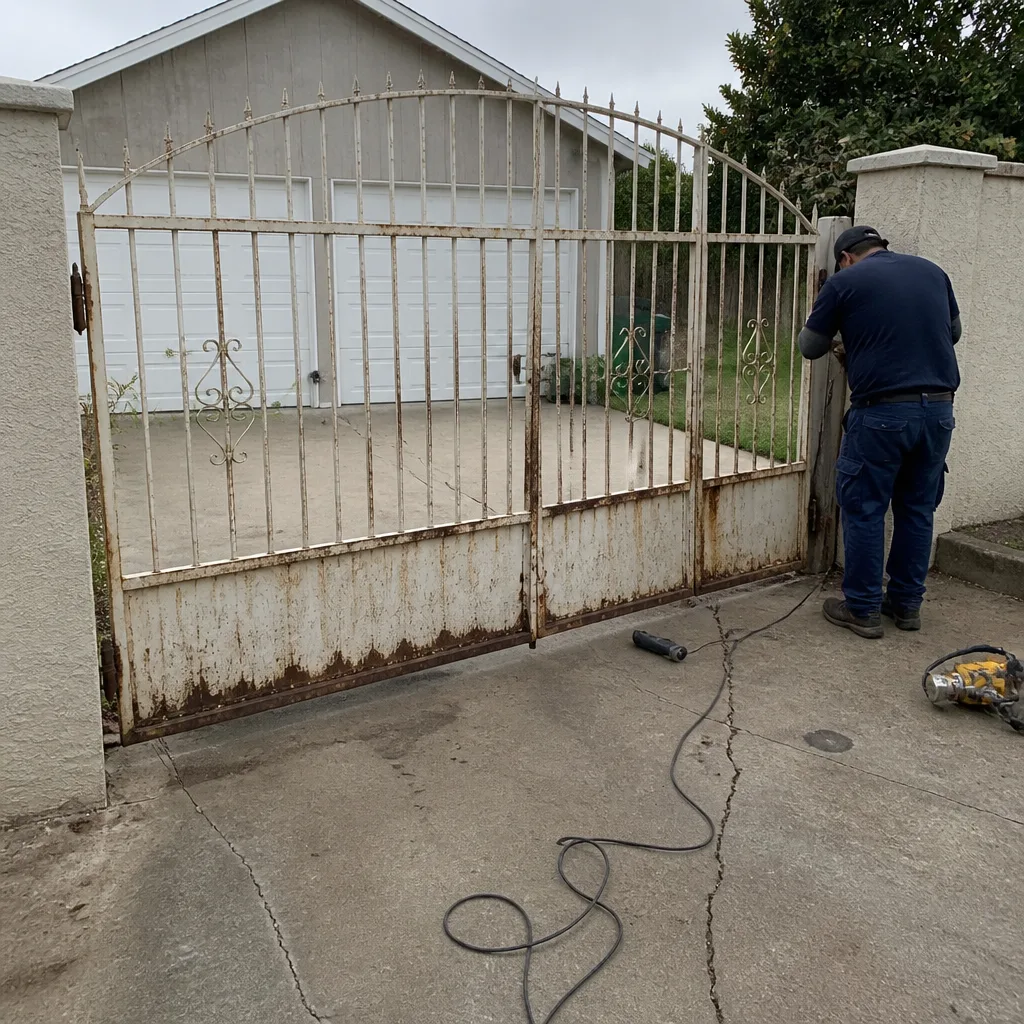 Before
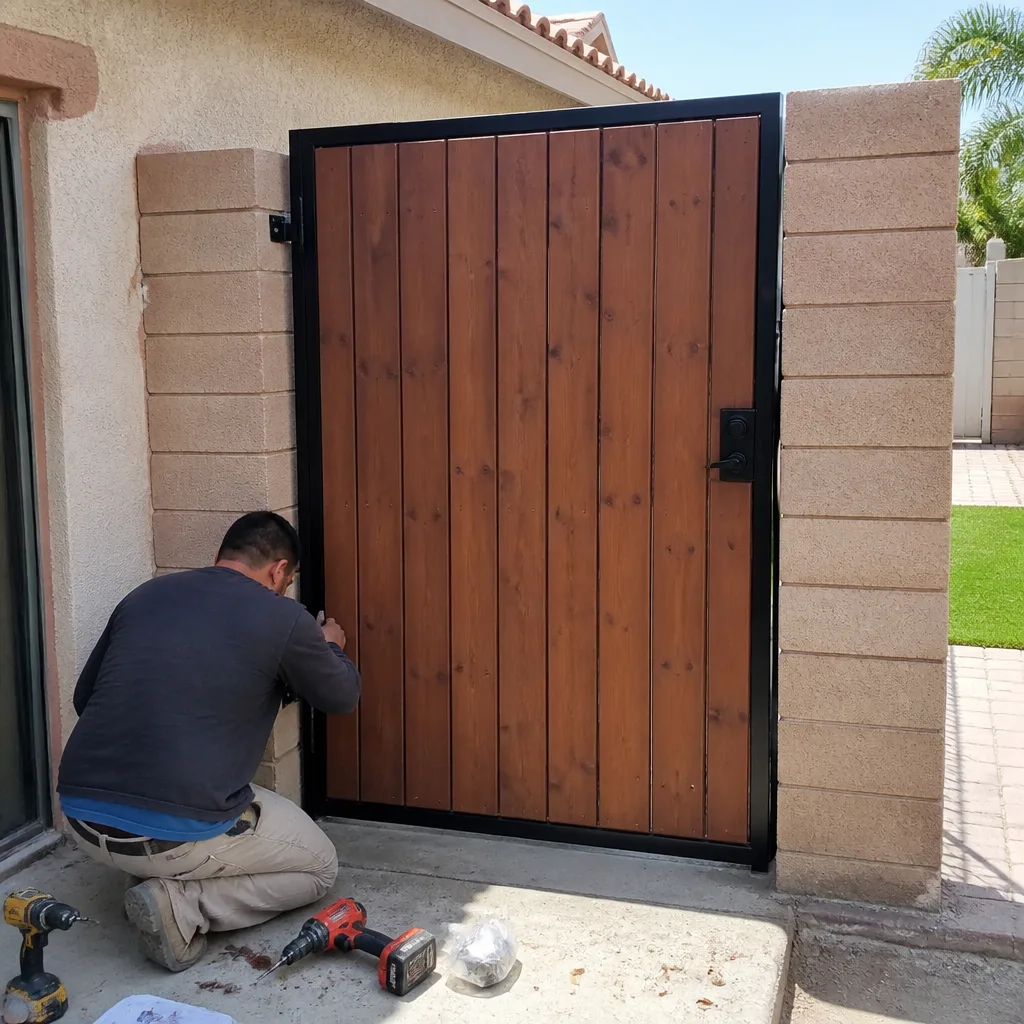 After
After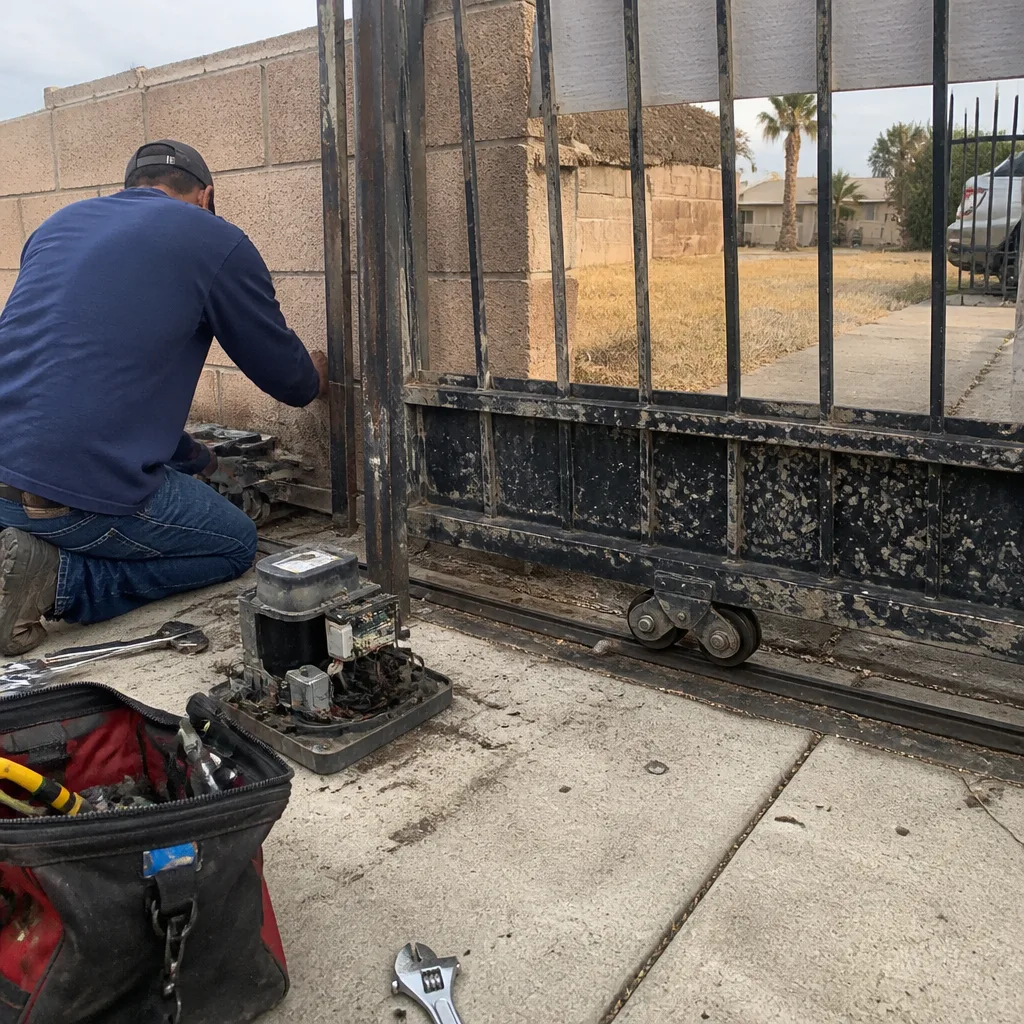 Before
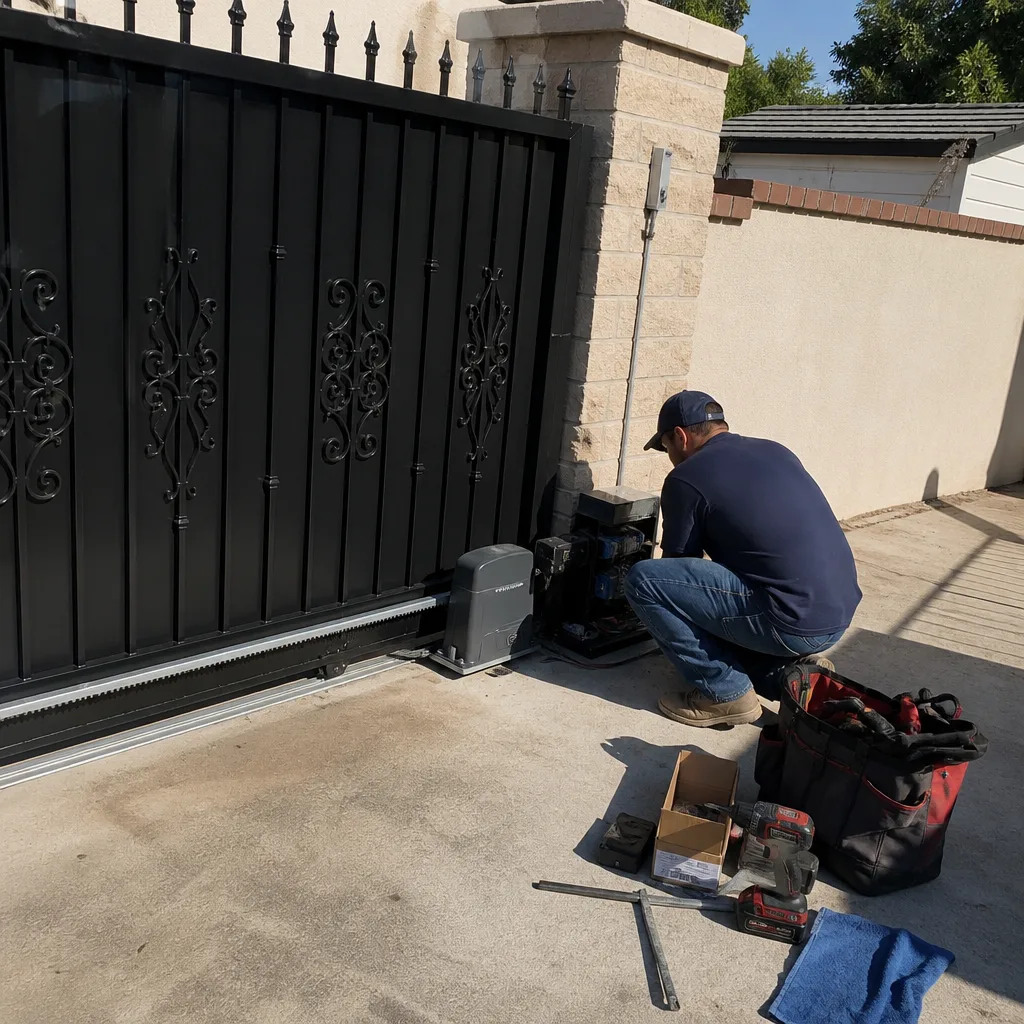 After
After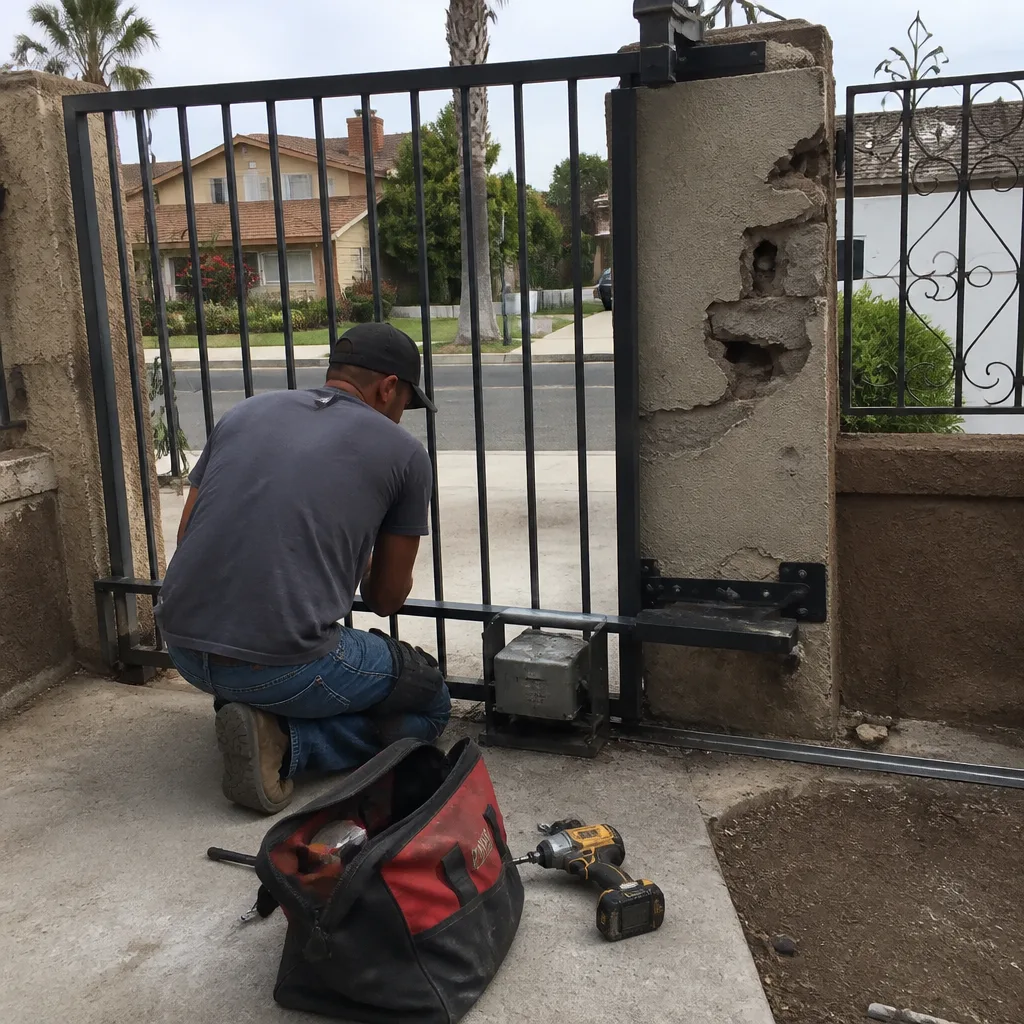 Before
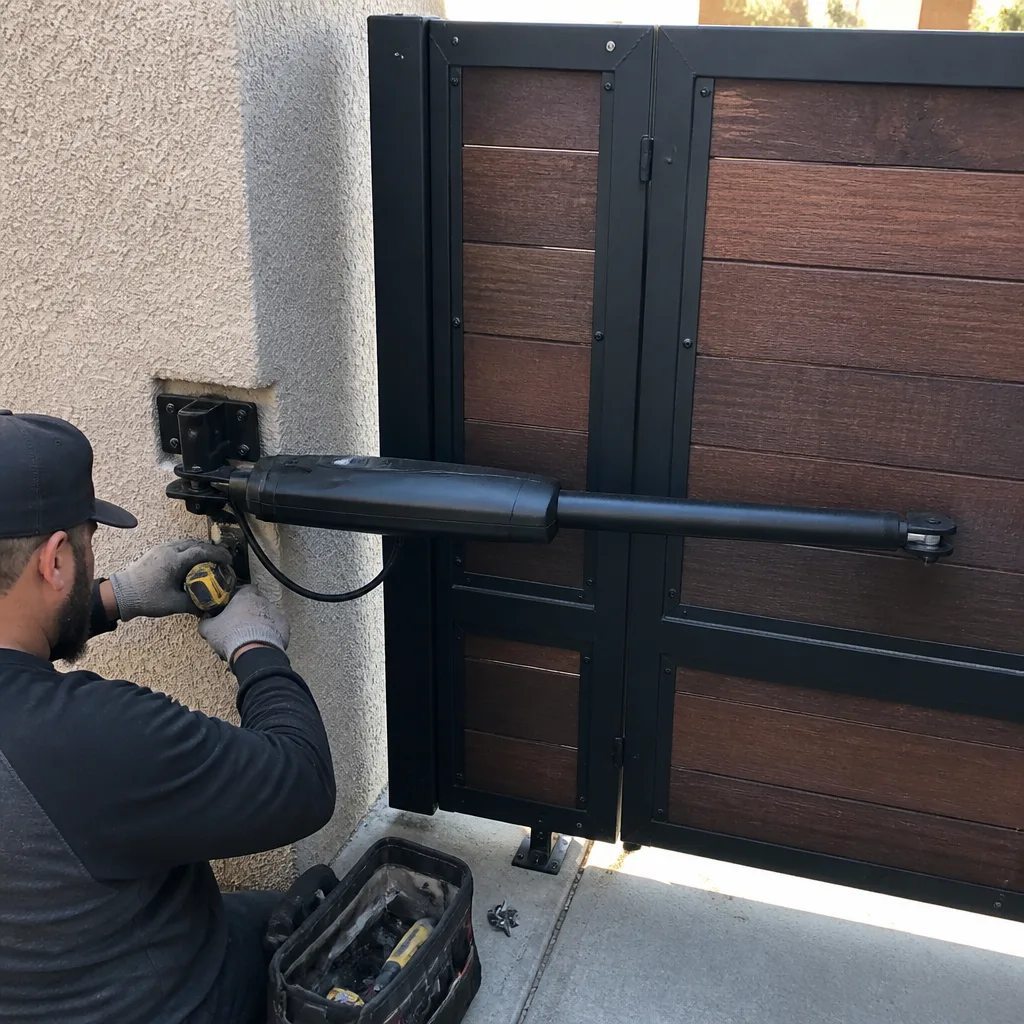 After
AfterGate Repair Permits, Codes & Inspections in CA: What You Need to Know
Most homeowners in Fontana assume our Gate Repair services never touch the permit desk. Replacing a hinge, swapping a keypad, rewiring a photo-eye: none of that requires City Hall. But the moment you replace a motorized operator, set new posts in concrete, or install a gate that didn’t exist before, you’ve crossed into regulated territory, and California’s UL 325 entrapment standards follow you home. A gate that crushes a child because its auto-reverse sensor wasn’t tested to UL 325 spec isn’t just a tragedy. It’s a code violation that traces back to whoever pulled the permit, or didn’t. This guide explains exactly what the City of Fontana requires, what inspectors look at, and how to keep the paperwork attached to your property so the next homeowner isn’t left guessing.
Quick Answer
In Fontana, California, gate repairs that replace existing parts in-kind, like a hinge, wheel, keypad, or circuit board, generally do not require a permit. For Gate Repair Warning Signs: A Fontana Homeowner’s Reference Guide, see our related resource. Gate installations, new post footings, and any work that replaces or upgrades a motorized gate operator do trigger permit and inspection requirements, including compliance with UL 325 entrapment protection and California Building Code Chapter 30. The permit belongs to the property, not the contractor, so the inspection sign-off should stay in your files.
Table of Contents
- When the City of Fontana Requires a Permit for Gate Work
- UL 325 in Plain Language: What the Entrapment Standard Actually Requires
- HOA Gates and California Title 19: Where Master-Planned Fontana Gets Complicated
- The Inspector’s Checklist Most Gate Companies Skip
- Permits, Inspections, and Your Homeowner’s Insurance Claim
- How to Get a Copy of the Permit Record and Inspection Sign-Off
- Common Mistakes to Avoid
- When to Call a Professional
- Frequently Asked Questions
- The Bottom Line
BeforeAfterWhen the City of Fontana Requires a Permit for Gate Work
The City of Fontana follows the California Building Code, and its permit triggers for gate work are narrower than most people expect but broader than most contractors admit. A permit is required when you install a new gate that didn’t exist before, when you pour new post footings, when you replace a motorized operator with a different model or voltage, and when you run new electrical to the gate. A permit is not required when you replace a hinge, a wheel, a keypad, a circuit board, a battery, or a photo-eye on an existing gate, provided the replacement part is equivalent to what was there.
That distinction, replacement-in-kind versus new work, is where most Fontana gate repair disputes start. We’ve reviewed written estimates from other companies that quietly left the permit out of a motor replacement quote, then billed it as a surprise line item later. The permit fee itself is small, usually under $200 for a residential gate operator replacement in Fontana. What’s not small is the stop-work order if an inspector drives past and sees fresh concrete and a new operator with no posted permit.
Here’s the practical breakdown for Fontana residents:
- Replacement-in-kind repairs: hinge swap, wheel replacement, keypad reprogramming, circuit board replacement, battery swap - no permit, no inspection.
- Motorized operator replacement: permit required, even if the new operator is the same brand. The City treats operator replacements as new electrical work.
- New post installation: permit required for any post set in concrete deeper than 24 inches, which is nearly every gate post in Fontana’s clay-heavy soil.
- New gate installation: permit required, full stop. This includes adding a pedestrian gate where one didn’t exist.
- Electrical work: any new conduit, new circuit, or new low-voltage run to the gate requires an electrical permit and a separate electrical inspection.
If you’re dealing with an urgent repair on an existing gate, like a Gate Repair in Fontana on a spring that’s let go, none of that requires a permit. The permit question only enters when the work changes the structure or the automation.
UL 325 in Plain Language: What the Entrapment Standard Actually Requires
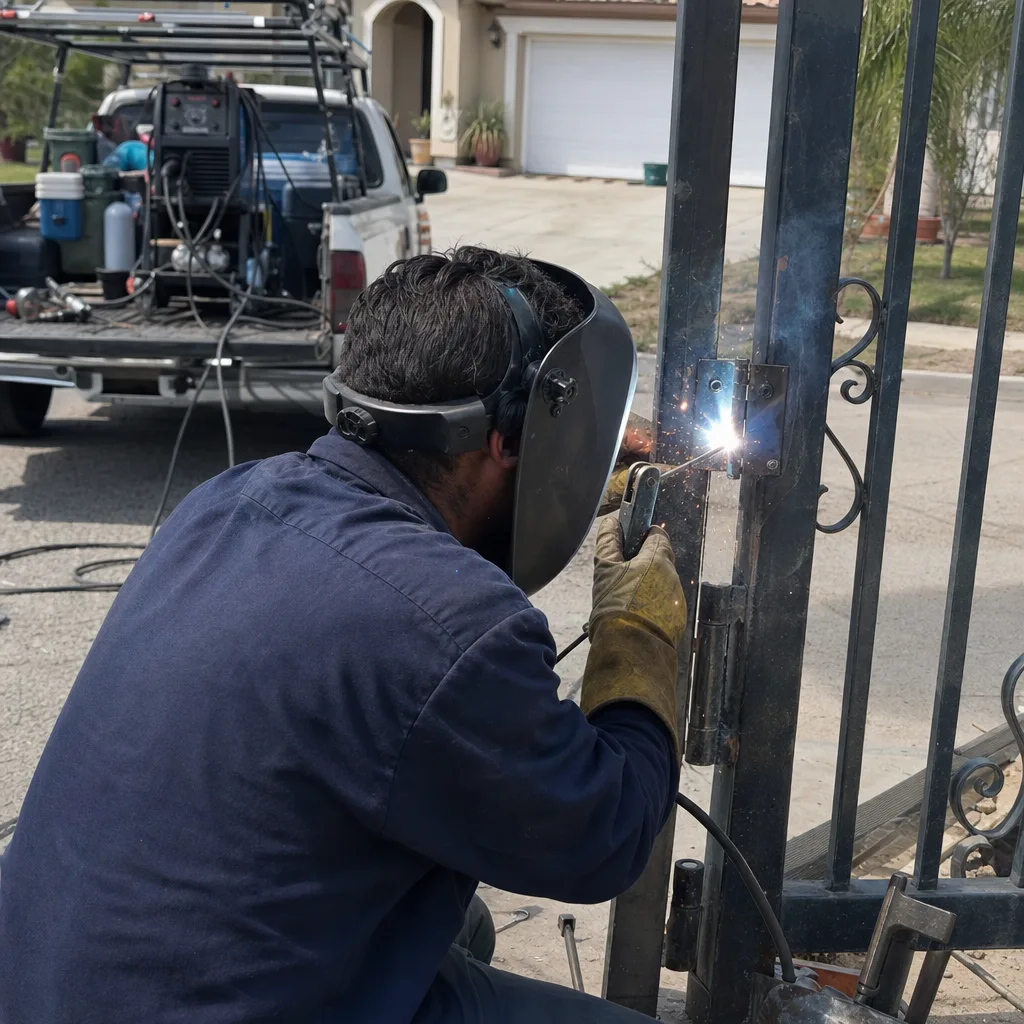
UL 325 is the safety standard that governs automated gate operators in the United States, and California adopted it into the Building Code with no carve-outs for residential properties. The standard exists because automated gates have killed people, most often children, when the gate failed to reverse after hitting an obstruction. In plain language, UL 325 requires every automated gate to have at least two independent entrapment protection devices, and one of them must be a monitored device that can detect an obstruction even if the gate is stationary.
Here’s what that means on a Fontana driveway, translated out of code language:
- Photo-eyes: the infrared beam across the gate path that stops and reverses the gate if anything crosses it. One is required for a swing gate, two for a slide gate, and the units must be wired so a failure stops the gate, not disables the safety.
- Contact edges or edge sensors: pressure-sensitive strips on the gate’s leading edge that reverse the gate if they touch something. On slide gates, these are mandatory regardless of photo-eye coverage.
- Inherent entrapment sensing: the motor itself must be able to detect the resistance of an obstruction and reverse. This is built into modern operators from DoorKing, Ghost Controls, Elite, and Mighty Mule, but it has to be calibrated correctly, and calibration is a setting, not a default.
- Warning signage: UL 325 requires specific warning placards mounted on both sides of the gate, and they must be legible from the road. This is the single most-skipped requirement in residential gate work.
We’ve calibrated hundreds of UL 325-compliant operators across Fontana, and the most common defect we find is a photo-eye that was never wired into the operator’s monitoring circuit. The gate works, the beam is there, but if the photo-eye fails silently, the gate keeps moving. That’s not a nuisance failure; that’s a code violation and a liability.
HOA Gates and California Title 19: Where Master-Planned Fontana Gets Complicated
Fontana has one of the highest concentrations of master-planned communities in the Inland Empire, and many of those communities share gate infrastructure through an HOA. That’s where California’s Title 19 fire code intersects with residential gate work, and it’s the intersection most homeowners never hear about until the fire marshal shows up.
Title 19 requires that any gate across a fire access road or a designated emergency access lane be operable by the fire department without a code, a keycard, or a remote. In practice, that means HOA entry gates in Fontana communities carry a siren-activated sensor, often a 3M Opticom emitter or an equivalent, wired to open the gate when an approaching fire engine runs its siren. If that sensor fails, the HOA has a fire code violation, and if a homeowner’s repair work disabled it, the liability lands on the homeowner.
The practical takeaways for Fontana homeowners in HOA-governed communities:
- Read your HOA’s CC&Rs before touching the gate. Some HOAs own the gate and the operator, some own only the physical gate, and some require architectural review for any visible change.
- If your HOA gate is on a fire access route, the Title 19 siren sensor is not optional equipment. A repair that leaves it offline needs to be flagged to the HOA board immediately, and in writing.
- We routinely service shared gate operators from DoorKing and Elite in Fontana HOAs, and a quarter of the calls involve a Title 19 sensor that stopped responding. It’s frequently a 30-minute fix, but it has to be documented, because the fire marshal’s next visit won’t accept a verbal explanation.
For standalone residential gates on a private driveway, Title 19 generally doesn’t apply. The trigger is fire access, not gate automation in general. But in Fontana’s denser planned communities, that distinction matters more than most contractors acknowledge.
The Inspector’s Checklist Most Gate Companies Skip
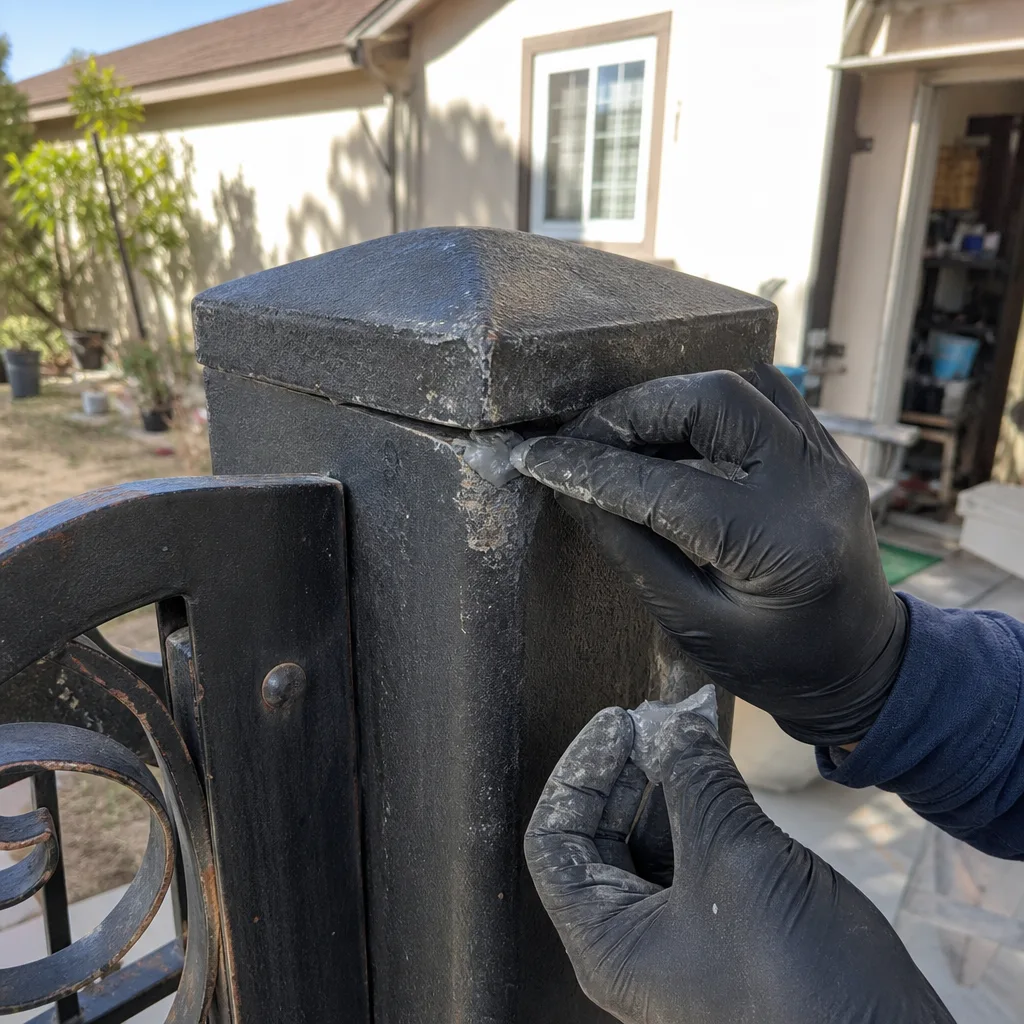
A Fontana building inspector’s gate inspection is short, usually 20 to 30 minutes, and it follows a checklist that isn’t published anywhere in plain language. We’ve been through enough of these inspections to know exactly what gets flagged and what gets waved through. The items that fail most often are the ones the installer didn’t think mattered.
Here’s the inspector’s working list, in order of how frequently we see it fail:
- UL 325 warning signage mounted and legible. Two placards per gate, one on each side, facing outward. If the signs are in the box the operator shipped in, the inspection fails. This is the most common failure we correct on gates installed by homeowners or by companies that don’t do their own closeout.
- Photo-eye function demonstrated live. The inspector will block the beam and watch the gate stop and reverse. If the photo-eye only works in one direction or only stops the gate without reversing, that’s a fail.
- Contact edges present on slide gates. Slide gates require an additional entrapment protection device beyond the photo-eyes. A gate with only photo-eyes will fail on a slide installation, every time.
- Manual disconnect operable without tools. The gate must have a manual release that lets a person open it by hand during a power outage. A release that requires a socket wrench fails.
- Set limits verified. The inspector watches the gate reach both open and closed limits and confirms it stops under motor control, not by slamming into the stops. A gate that bounces off a physical stop is a UL 325 violation.
- Electrical work to code. Conduit secure, junction box weatherproof, GFCI protection on any 120V circuit, and a proper disconnect if the operator runs on a dedicated circuit.
We photograph the limit-switch positions and the photo-eye alignment on every job we close, before the inspector arrives. That’s part of The Haven Standard, Clause 4: evidence on every job, in writing and on camera. When the inspector flags something, the record shows what was left behind, not a vague description from memory.
Permits, Inspections, and Your Homeowner’s Insurance Claim
Here’s the part of the conversation most gate contractors avoid, because it’s uncomfortable: if a motorized gate injures someone on your property, your homeowner’s insurance carrier will ask for the permit record and the inspection sign-off. If neither exists, the carrier may deny the liability portion of the claim, and you’ll be defending yourself in court with money out of your own pocket.
The logic is straightforward. A permit and a passed inspection are evidence that the work was performed to code. No permit means no third party ever verified the entrapment protection, the signage, or the electrical. In a claim where a child was injured by a gate that closed on them, the first question the plaintiff’s attorney asks is: who installed this, and did the City sign off on it?
We’ve seen this in Fontana. Not often, but often enough that we tell every customer the same thing: the permit fee is the cheapest liability insurance you’ll ever buy. It’s under $200 in most cases, and it puts the City’s inspection record between you and the claim. If the gate company you’re considering tells you the permit isn’t necessary for a new operator or a new gate, get that in writing, and then call the City of Fontana’s Building & Safety division and ask directly. For help choosing a qualified professional, read How to Hire a Gate Repair Contractor in Fontana: A Step-by-Step Guide. The answer will be different from what the contractor told you.
How to Get a Copy of the Permit Record and Inspection Sign-Off
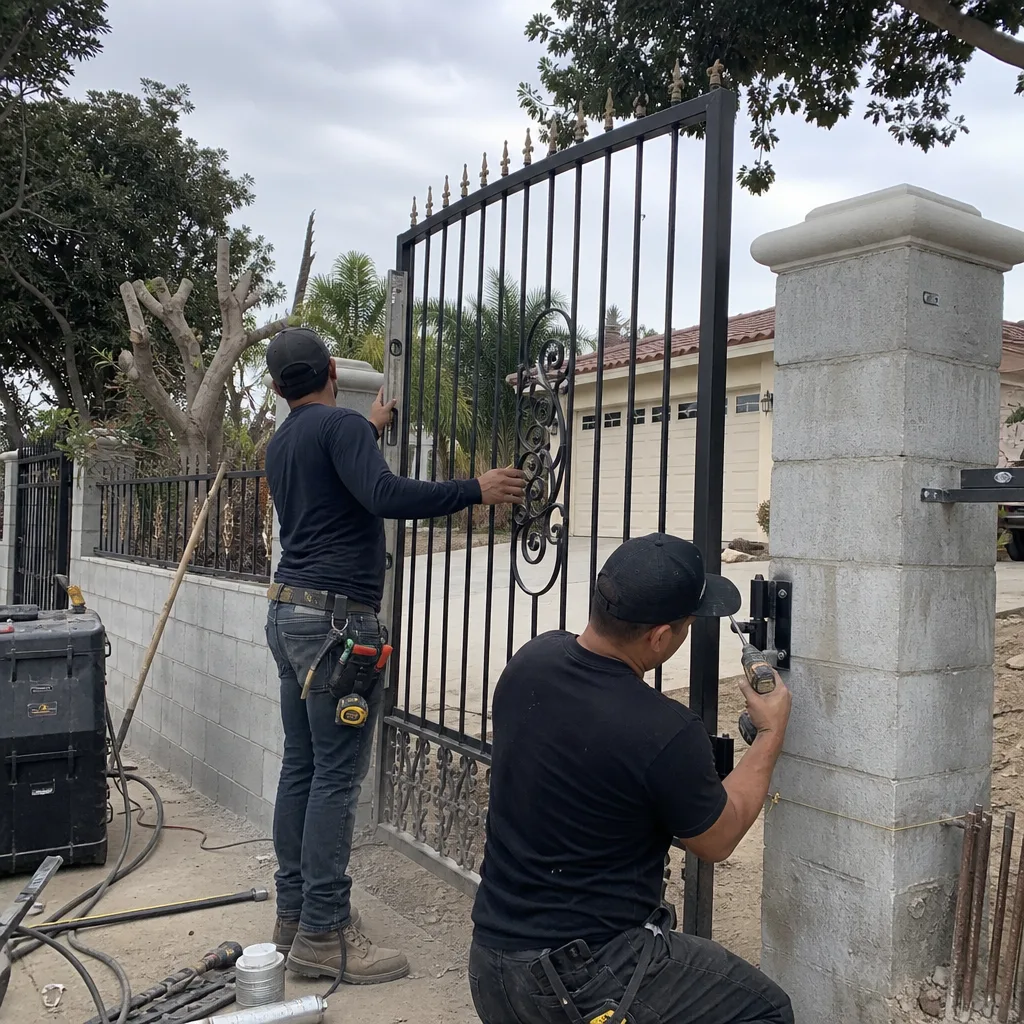
The permit belongs to the property, not the contractor. That means the record is yours by right, and you should have a copy in your files before the final payment clears. In Fontana, the process is simple, but almost no one does it.
Here’s the step-by-step:
- Confirm the permit number. The permit number is on the permit placard posted at the job site. If the contractor never posted it, ask for the number directly, in writing.
- Request the record from the City. The City of Fontana Building & Safety division maintains permit records. You can request a copy in person at City Hall or through the City’s online permit portal, if the permit was filed digitally. There’s typically a small copying fee.
- Get the signed inspection card. The inspector signs the job card at the final inspection. Your contractor should leave a copy with you. If they don’t, the signed card is part of the permit record at the City and can be retrieved the same way.
- Attach the record to your property file. Keep the permit, the signed inspection card, and the operator’s model and serial number together. When you sell the home, this file answers the buyer’s questions about the gate without a phone call.
We include the permit number and the inspection outcome in the documented record we leave with every Fontana customer after a permitted job. That’s not a service upgrade; it’s the same documentation habit Adrian Vance developed on commercial access-control sites starting in 2014, applied to a residential driveway. The paper trail exists so the next technician, the next inspector, or the next homeowner never has to guess.
Common Mistakes to Avoid
- Assuming all repairs are unpermitted. A hinge is one thing. A new operator is another. The line is replacement-in-kind versus new work, and the City of Fontana enforces it.
- Skipping the permit on an operator “upgrade” because it’s the same brand. The City treats the operator as new electrical equipment regardless of brand, so it doesn’t matter that the old DoorKing is being replaced by another DoorKing.
- Letting the contractor file the permit but never confirming it was pulled. If the permit isn’t posted on site, ask for the number. If the number isn’t real, the work is unpermitted, and your insurance exposure resets to zero protection.
- Ignoring HOA requirements on a shared gate. In Fontana master-planned communities, the HOA may own the operator even though you own the driveway. Work done without HOA approval can be a contract violation.
- Buying a UL 325-compliant operator and assuming the installation is compliant. Compliance is a wiring and calibration outcome, not a product feature. A compliant operator with a photo-eye wired to the wrong terminal is non-compliant.
- Paying the final invoice without the inspection sign-off. The final payment is your leverage. No signed inspection card, no final payment. Any contractor who resists that condition is telling you something about their closeout process.
- Assuming the permit will slow the job down. A residential gate permit in Fontana is often issued within a few days, and the inspection can be scheduled same-week. The delay argument is usually a cover for an unpermitted habit, not a real scheduling problem.
When to Call a Professional

A gate that requires a permit is, by definition, a job where the installer’s liability follows the paperwork. If you’re replacing a motorized operator, setting new posts, or installing a new gate in Fontana, this isn’t a weekend project, and the UL 325 entrapment calibration isn’t something to learn from a YouTube walkthrough. The photo-eye monitoring, the contact-edge wiring, the limit setting: these are code requirements with a body count attached when they fail. If your gate is in a master-planned community with HOA oversight and Title 19 fire access, the stakes are higher, not lower. Vance Gate Repair Fontana home provides written price quotes before any work begins, on permitted and unpermitted work alike. For a free estimate in Fontana, call (951) 476-1539.
Frequently Asked Questions
Only if the repair changes the structure or the automation. Replacing a hinge, wheel, keypad, circuit board, or photo-eye on the existing gate is a no-permit repair. Replacing the motorized operator, installing new posts, or adding a new gate does require a permit from the City of Fontana. When in doubt, call the City’s Building & Safety division and describe the work; the answer costs nothing. For an exact assessment of your gate, call (951) 476-1539 and we’ll tell you what the work entails before any tools come out.
Most residential gate permits in Fontana run under $200, depending on the scope. A simple motorized operator replacement permit trends toward the lower end of that range, while a new gate with post footings and electrical runs trends slightly higher. The fee is set by the City, not the contractor, and it should appear as a line item on your written estimate, not as a surprise at the end. Gate Motor & Opener in Fontana work that requires a permit will show the fee separately, in writing, before the job starts.
UL 325 requires at least two independent entrapment protection devices, one of which must be a monitored device capable of detecting an obstruction even when the gate is not moving. In practice, that means a photo-eye on a swing gate, a photo-eye plus contact edges on a slide gate, and a motor with calibrated inherent entrapment sensing. It also requires warning signage mounted on both sides of the gate and a manual release that operates without tools. These requirements apply to every automated gate in California, not just commercial installations.
Yes. If unpermitted gate work is discovered, the City can issue a stop-work order, require a permit to be pulled retroactively, and in some cases require the work to be exposed for inspection. Retroactive permits in Fontana typically cost more than the original permit would have, and the inspection is often more thorough. If the work fails, it has to be corrected, and by then the original installer may be unreachable.
The HOA receives a violation notice, and the clock starts. Shared gates across fire access roads must be operable by the fire department’s siren sensor under California Title 19, and a failed sensor is a fire code violation, not a maintenance suggestion. If the failure traces back to work performed on a homeowner-owned portion of the gate, the liability can land on that homeowner. Gate Installation in Fontana and operator work on HOA gates should always include documentation of the Title 19 sensor’s function after the job is complete.
Request it from the City of Fontana Building & Safety division using the permit number from the job site placard, or your address if the placard is gone. There’s typically a small copying fee, and the signed inspection card from the final inspection is included in the record. Keep the permit, the signed card, and the operator’s model and serial number together in your property file so the next homeowner has the full picture without a phone call. Vance Gate Repair Fontana includes the permit number and inspection outcome in the documented record left on every permitted job.
The Bottom Line
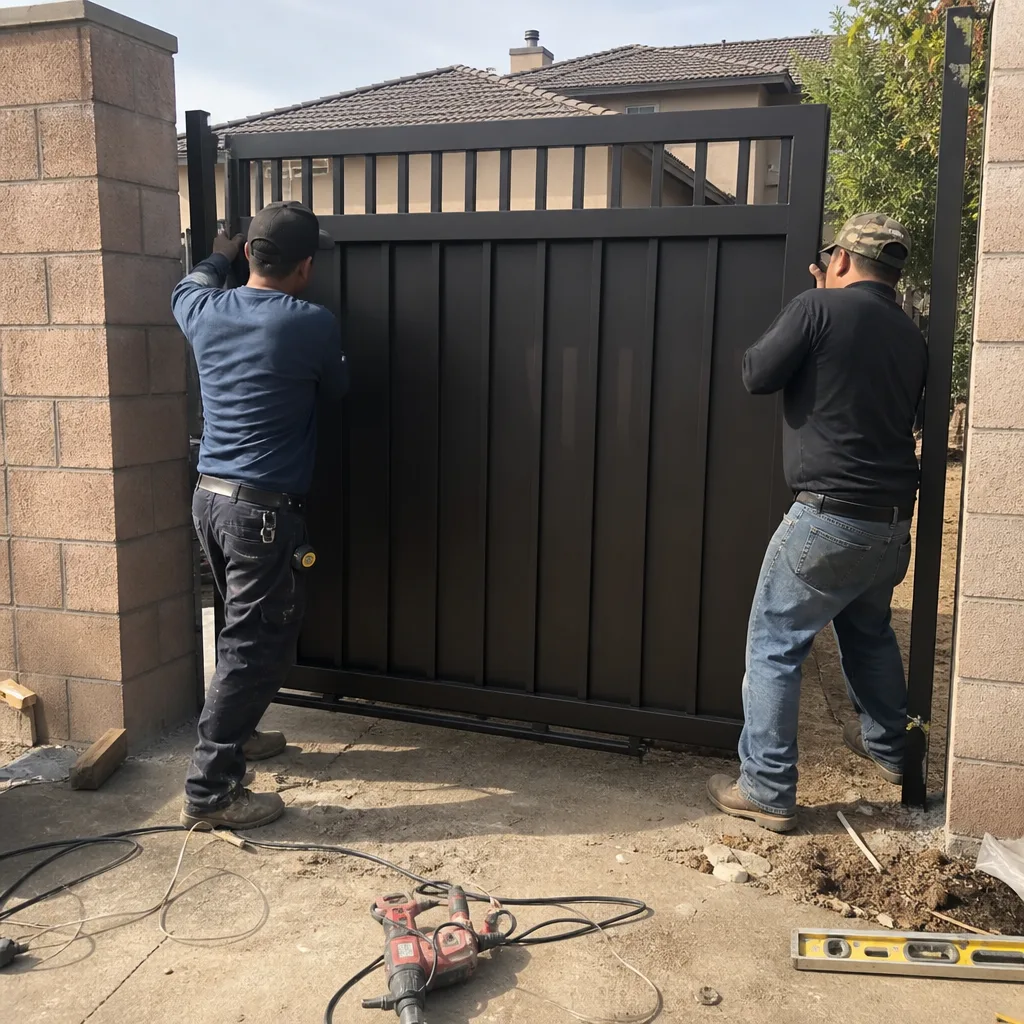
Fontana gate permits are cheap, the inspections are fast, and the alternative is a liability you carry alone. The line between a permitted and unpermitted job is the same line between replacement and new work: a hinge is a repair, a new operator is an installation. UL 325 compliance isn’t a product feature; it’s a wiring and calibration outcome that an inspector verifies. Title 19 adds fire-access requirements in HOA-governed communities that no homeowner should discover mid-dispute. And the paperwork belongs to you, not the contractor. A Gate Repair in Fontana done right leaves behind a permit number, an inspection sign-off, and a documented record, not a verbal assurance.
Written by Adrian Vance, Owner at Vance Gate Repair Fontana, serving Fontana since 2014. Explore more guides & resources on our blog.